Profile
The rook is the countryside crow — highly social, deeply intelligent, and possessed of a dignity that rewards anyone willing to spend time watching a rookery in full clamour.
Rook — call
Recording via Xeno-canto — a community of wildlife sound recordists.
Where the carrion crow is a solitary opportunist, the rook is a creature of community. Rooks nest colonially in rookeries — sometimes numbering hundreds of pairs — in tall trees at the edges of farmland, returning to the same sites year after year. The noise and activity of a rookery in early spring, birds squabbling over nest material and conducting elaborate courtship displays, is one of the great spectacles of the British countryside.
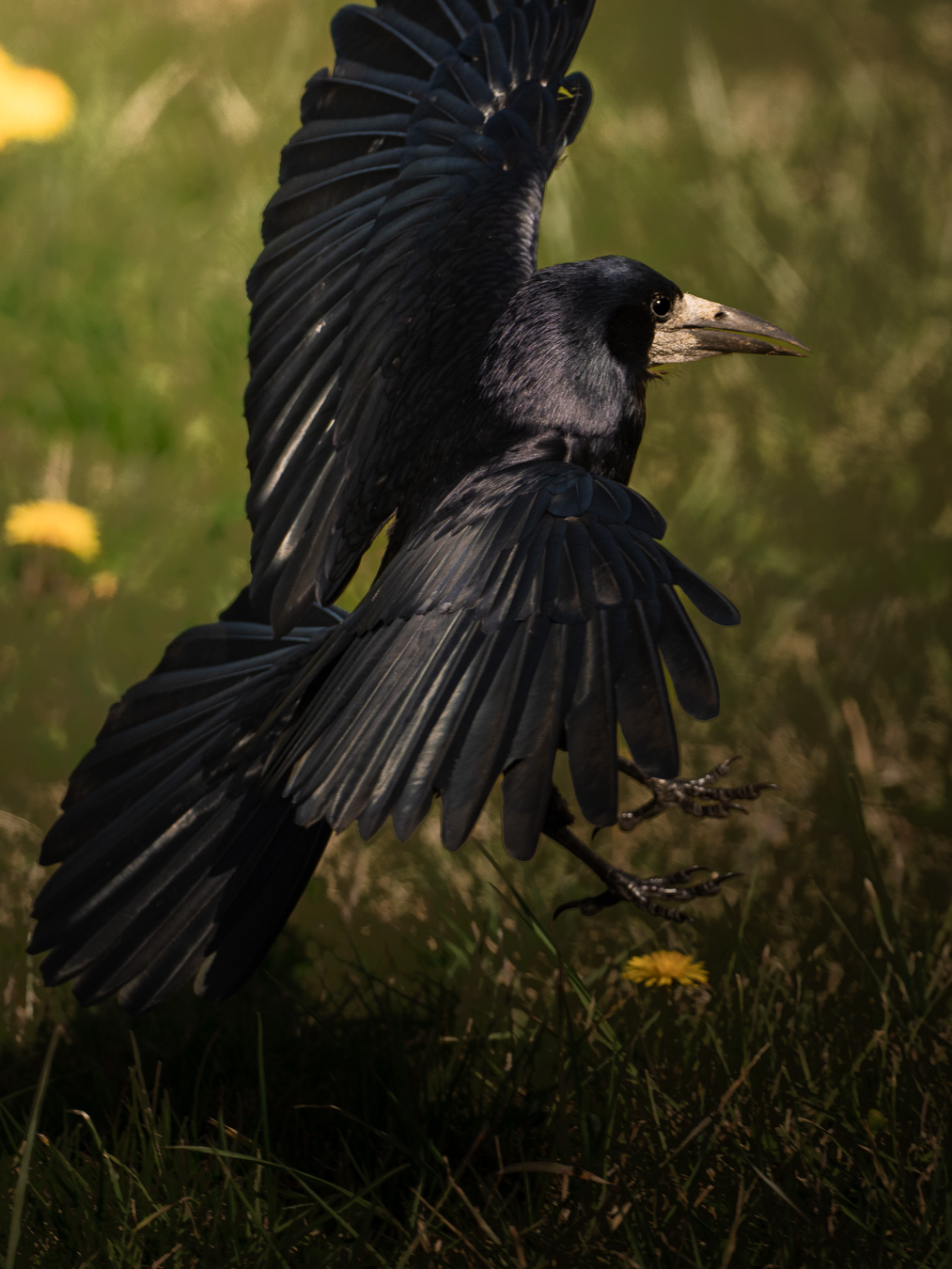
The rook is distinguished from the similar carrion crow by the bare, pale skin at the base of its bill — a feature that develops as the bird matures — and by its baggy, somewhat dishevelled appearance in flight. It is an important indicator of farmland health, its fortunes closely linked to the availability of soil invertebrates in pastoral landscapes.
Wingspan
81–99 cm
Colony size
Up to several hundred pairs
Best seen
Year-round, farmland
Photography
Identification
Bare grey bill base
The pale, bare skin at the base of the bill is the most reliable distinction from the carrion crow. It develops as the bird matures — young rooks initially resemble crows before the bare patch appears.
Peaked crown & loose thighs
The rook has a distinctly peaked crown and loose, baggy feathering on the flanks and thighs giving it a somewhat dishevelled appearance compared to the sleeker carrion crow.
Purple-blue gloss
In good light the black plumage shows a rich purple-blue iridescent gloss, particularly on the wings and back — more pronounced than in the carrion crow.
Finger-tipped wings in flight
The long primary feathers are clearly separated at the wingtip in flight giving a fingered appearance, and the wings are held slightly bowed — more supple-looking than a crow's stiffer flight.
In the field
Vocalisation
The rook's call is a hoarse, drawn-out "kaah" — less harsh than the carrion crow and with a slightly nasal quality. At the rookery the combined sound of hundreds of calling birds creates an extraordinary cacophony that carries across the countryside. Individual birds can be heard producing a variety of quieter conversational notes at close range.
Rook — call
Recording via Xeno-canto — a community of wildlife sound recordists.