Profile
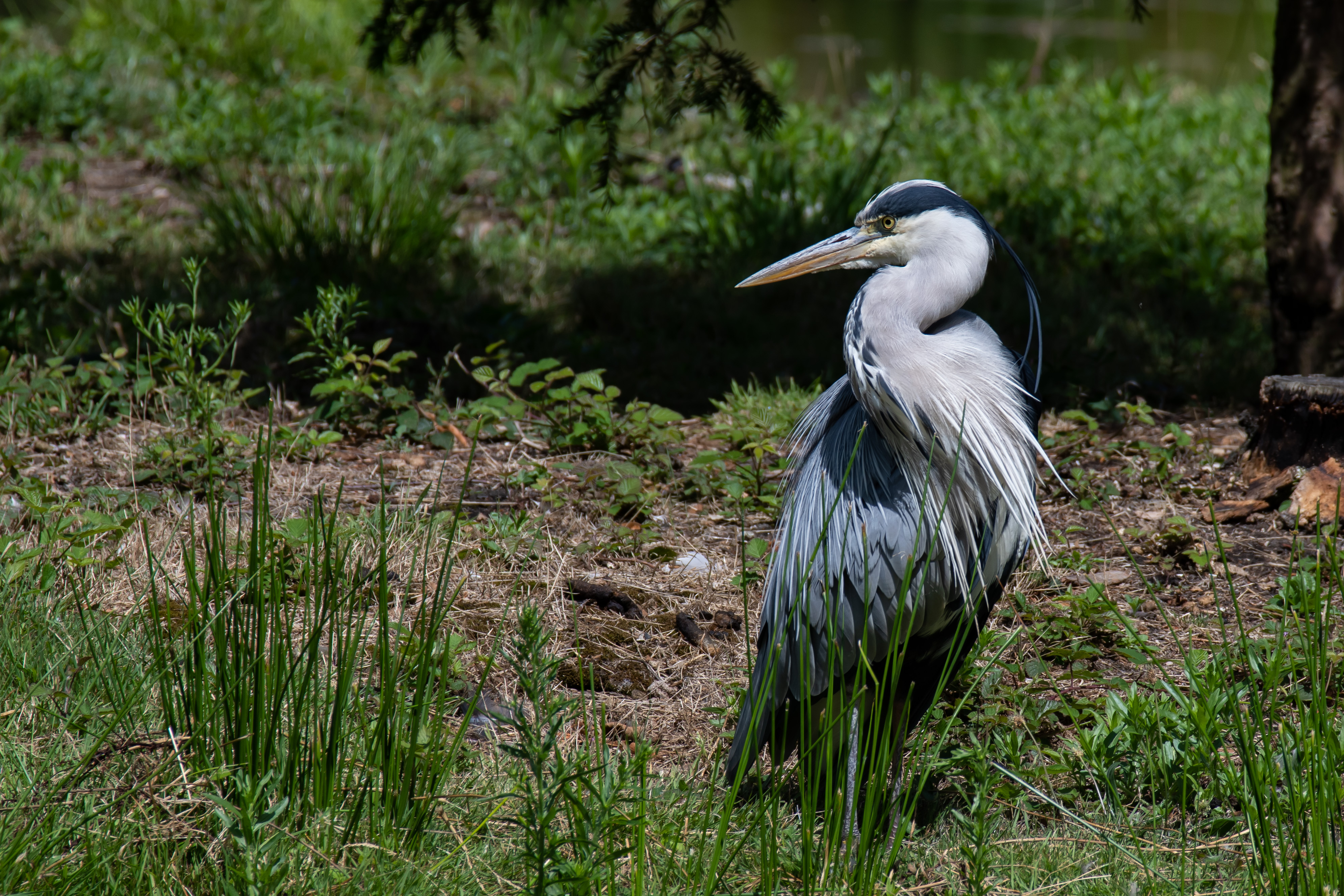
A study in the art of stillness. The grey heron can stand motionless for so long it seems to become part of the landscape itself — until, with one sudden movement, it doesn't.
Grey Heron — call
Recording via Xeno-canto — a community of wildlife sound recordists.
The grey heron is the largest bird most British people will ever see standing at the water's edge — a prehistoric-looking creature, slate-grey and deliberate, that brings to mind something far older than its surroundings. It hunts by patience, standing or moving with glacial slowness until a fish, frog, or small mammal ventures within range of its spear-like bill.
Despite their solitary appearance when feeding, grey herons are sociable nesters, gathering in heronries — sometimes numbering hundreds of pairs — in tall trees. The nests, large untidy platforms of sticks, are used and added to year after year, eventually becoming substantial structures that dominate the canopy above.
Wingspan
155–175 cm
Standing height
Up to 100 cm
Best seen
Year-round
Photography
Identification
Black neck stripe & plumes
A distinctive black stripe runs from the eye down the side of the white neck, terminating in long black plumes on the breast. These elongated feathers are particularly prominent in breeding plumage.
Yellow dagger bill
The long, powerful yellow-orange bill is the heron's primary hunting weapon — thrust forward with explosive speed to impale fish. It becomes flushed orange-pink during the breeding season.
Bowed wings in flight
In flight the grey heron is unmistakable — enormous bowed wings, neck retracted into an S-shape, long legs trailing behind. The slow, deliberate wingbeat is quite unlike any other large bird.
Grey & white plumage
Pale grey above and white below, with dark grey-black flight feathers. The contrast between the pale body and dark wingtips is visible in flight and at rest.
In the field
Vocalisation
The grey heron's call is a loud, harsh, somewhat prehistoric-sounding "fraank" — a deep, croaking cry delivered in flight or when alarmed. It is not a musical bird, but the call is unmistakable and carries a considerable distance. At the heronry, a remarkable variety of bill-clattering, grunting, and display calls can be heard during the breeding season.
Grey Heron — call
Recording via Xeno-canto — a community of wildlife sound recordists.