Profile
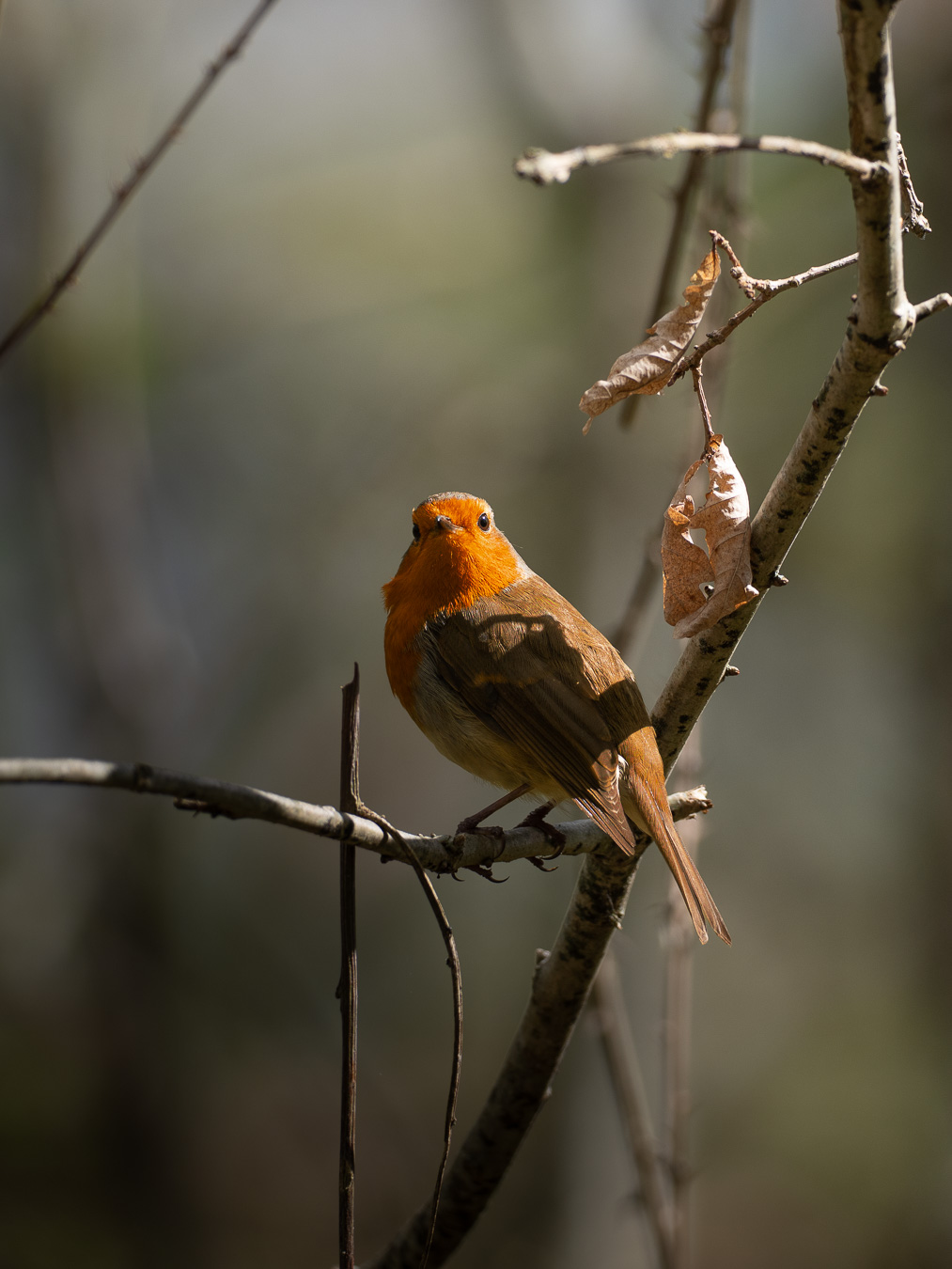
Britain's unofficial national bird, and arguably its most characterful. The robin is curious, territorial, and utterly indifferent to your presence once it has decided you pose no threat.
European Robin — song
Recording via Xeno-canto — a community of wildlife sound recordists.
Few birds have adapted to human company as successfully as the robin. Originally a woodland species that followed large animals through the undergrowth to pick up disturbed invertebrates, it has transferred this behaviour seamlessly to gardeners — perching on spade handles, investigating freshly turned soil, regarding you with one bright eye from a distance of just a few feet. It is a relationship built on opportunism, not affection, but it feels like friendship.
Behind the charming exterior lies a ferociously territorial creature. Robins will defend their patch year-round, and the famous red breast is both a warning and a challenge — displayed prominently at rivals during confrontations that can, on occasion, turn fatal. Their song, delivered even on the darkest winter mornings, is one of the most evocative sounds in the British countryside.
Wingspan
20–22 cm
Song season
Year-round
Best seen
Any time
Photography
Identification
Red breast
The vivid orange-red breast extending to the face is unmistakable. Used in territorial displays — a rival robin seeing a flash of red will respond aggressively even to a stuffed specimen.
Brown upperparts
Warm olive-brown above with no wing bars or obvious markings — the plain upperparts contrast cleanly with the red breast and white belly below.
Large dark eye
The prominent dark eye gives the robin its characteristic alert, inquisitive expression. Robins are crepuscular feeders and the large eye aids vision in low light.
Upright posture
The robin habitually holds itself very upright with a slightly puffed appearance, cocking its head to one side — a posture that aids detection of earthworms beneath the soil surface.
In the field
Vocalisation
The robin's song is one of the most familiar and beloved sounds in Britain — a rich, liquid, slightly melancholy warble delivered year-round, even on the darkest winter mornings. It sings at night near artificial lighting, leading to confusion with the nightingale. Its alarm call is a sharp, repeated tick.
European Robin — song
Recording via Xeno-canto — a community of wildlife sound recordists.